deer heights pork?

queenstown was built on a coin toss and luck
an arrowtip of gold gilding the western shore
today rimmmed with resorts and fine outlooks
while across the lake a newer savvy tills the bank

we drive through with our private permit
to view the animals on deer park heights
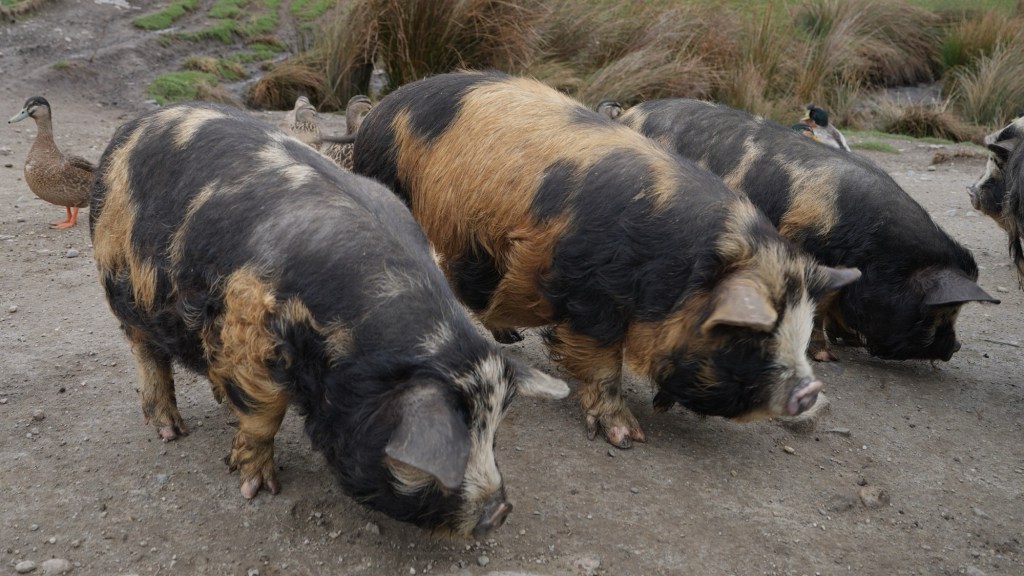
at the pig pen there's a chance
to buy a tin of feed for two dollars
it's a canny business model i muse
(as eager porcine pitter patter to our feet
in hopes of sheep nuts to eat)
offloading your business cost to tourists
pitstopping on hobbit film location trips

we wind further up where cynical motes recede
herds of deer and juvenile males gaze calmly
confident that the naughty goats
with their reputation for kicking the tires
will test our mettle at the topmost pass

returning downhil past bison stag and alpaca
it's scenic and romantic till the exit gantry
draws attention to transaction costs

are all the livestock we've met liable to be ate
some says our guide kath matter of fact

i suffer a momentary sentimental pang
but confess it's gone by breakfast
when i reach in the fridge
for the ham
kakaruai

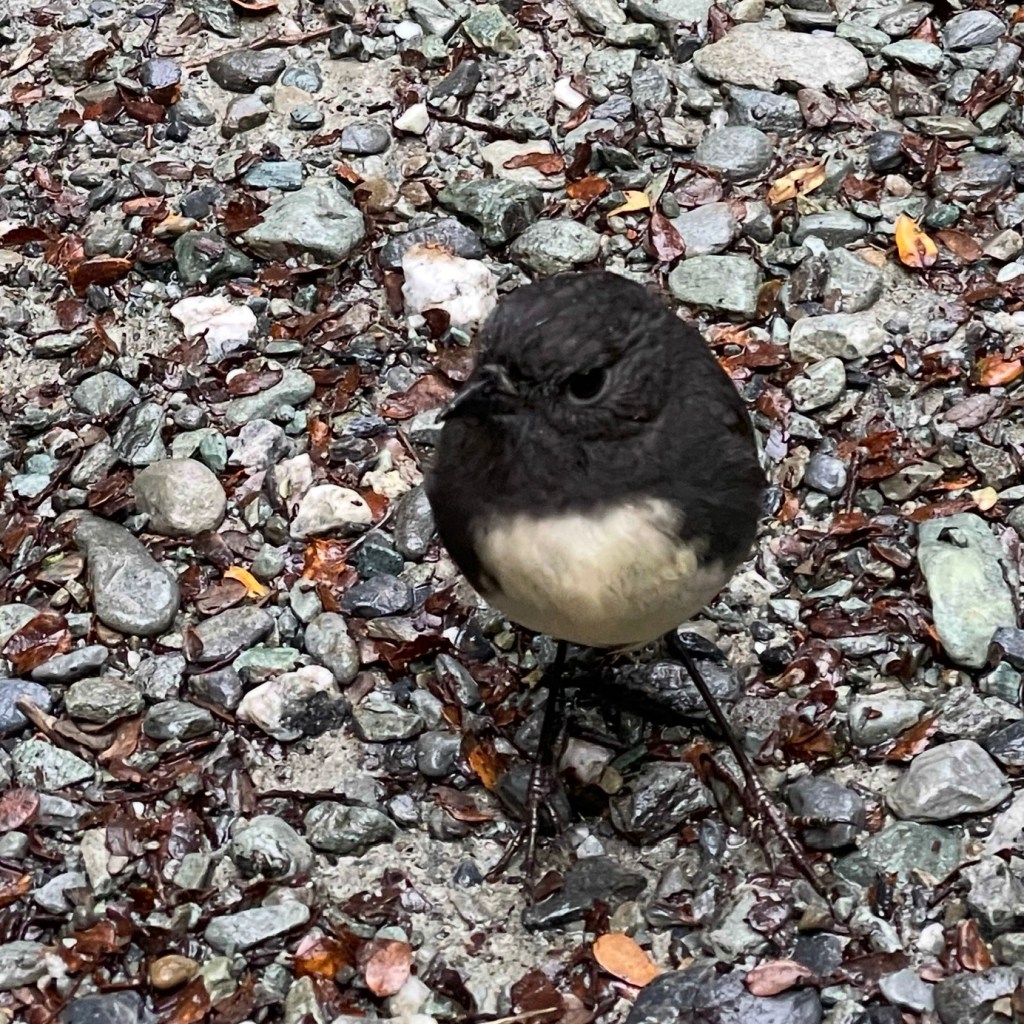
A close-up, eye-level photograph of a small, curious South Island robin, also known by its Māori name 'kakaruai,' standing on rocky ground. The bird's bold black and white plumage contrasts with the gray and brown stones of the Routeburn track, visually representing the friendly encounter described in the poem.
on routeburn
we meet two nice guys
one before one after
bridal veil falls

brian's been bonding with the universe
telling him to ditch construction
pick up a different brush
represent mount hikurangi
in water and acryllic
he heeds what quiet birds tell
don't ford the river
rain can build
to a point of no return

south island robin puffs up his breast of beige
hopping to greet us as the skies clear
like all his breed
a curious and friendly tom
putting no distance
between us and song
we heed what his lyric signs
while rain lets
retrace our way in double time

imagine the disquiet
when this peace is rent
by guttural shouts
urgent like death rattles
rushing to help
only to find
they were made by
three giggling louts


Top of her Lake

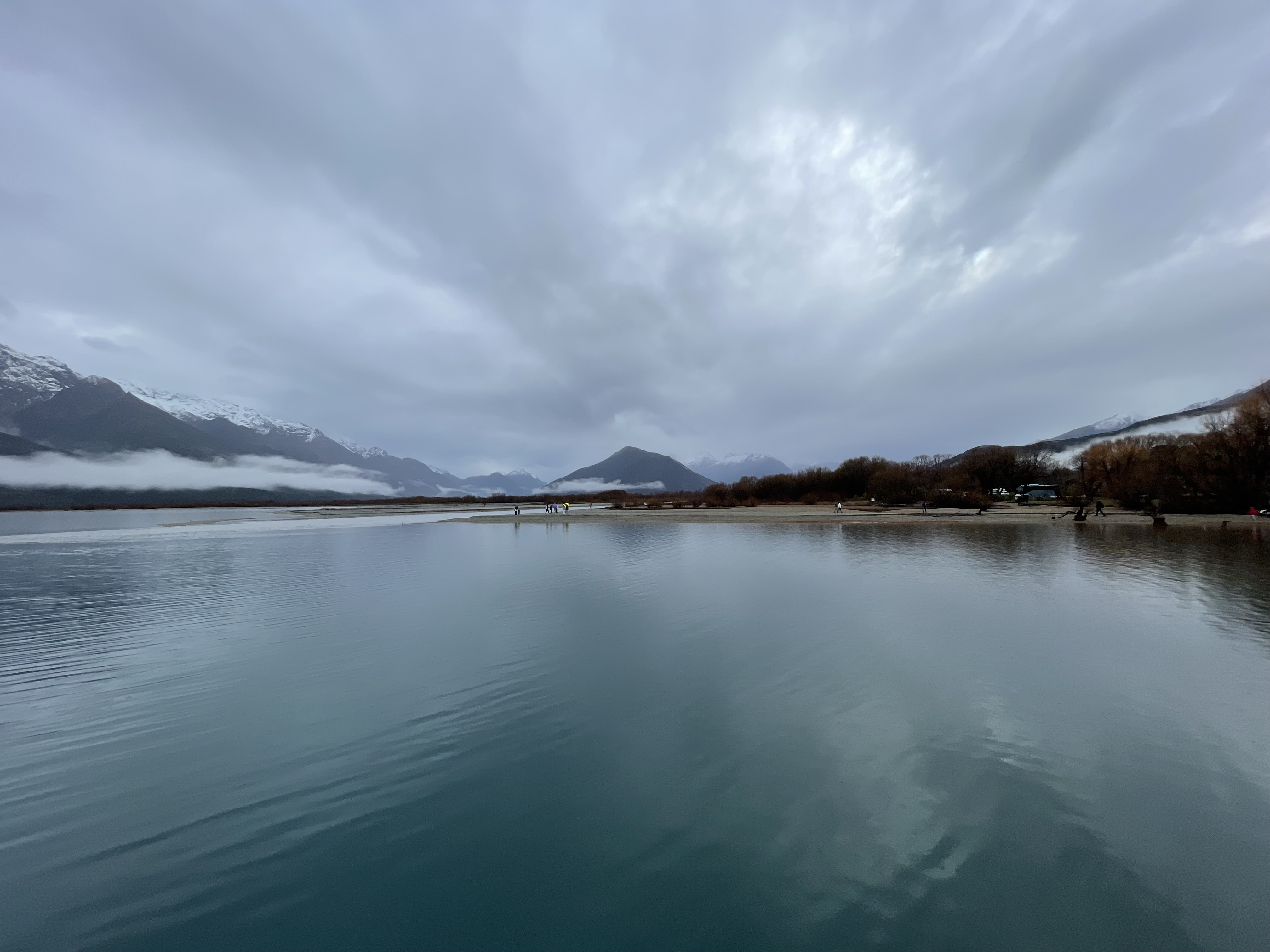
A wide-angle landscape photograph of Lake Wakatipu at Glenorchy, New Zealand, under a dramatic, cloudy sky. The serene blue-green water reflects the overcast clouds, with snow-capped mountains visible in the distance. The image evokes the somber and moody atmosphere of the television series 'Top of the Lake' and the poem's reflection on actress Elizabeth Moss.
sometimes it seems
there are only two divergent universes

the one where she can do no right
inhabited by thetans their engrams
and hubbubs over hubbard

the one where she can do no wrong
with tales of madmen
handmaids and shining girls

at the head of lake wakatipu
overcast and clouded
it's nevertheless clear
which one we inhabit

Close Encounters III: ode to the single bee?

Image

A sharp, macro photograph of a single bee collecting pollen from a vibrant yellow flower in the Tuscan countryside.

Close Encounters II: darling bud of june?

Image

A beautiful macro photograph of a spiky, delicate flower bud from a plant likely to be a type of broom, a common Tuscan wildflower.

Close Encounters I: mourning dew?

Image

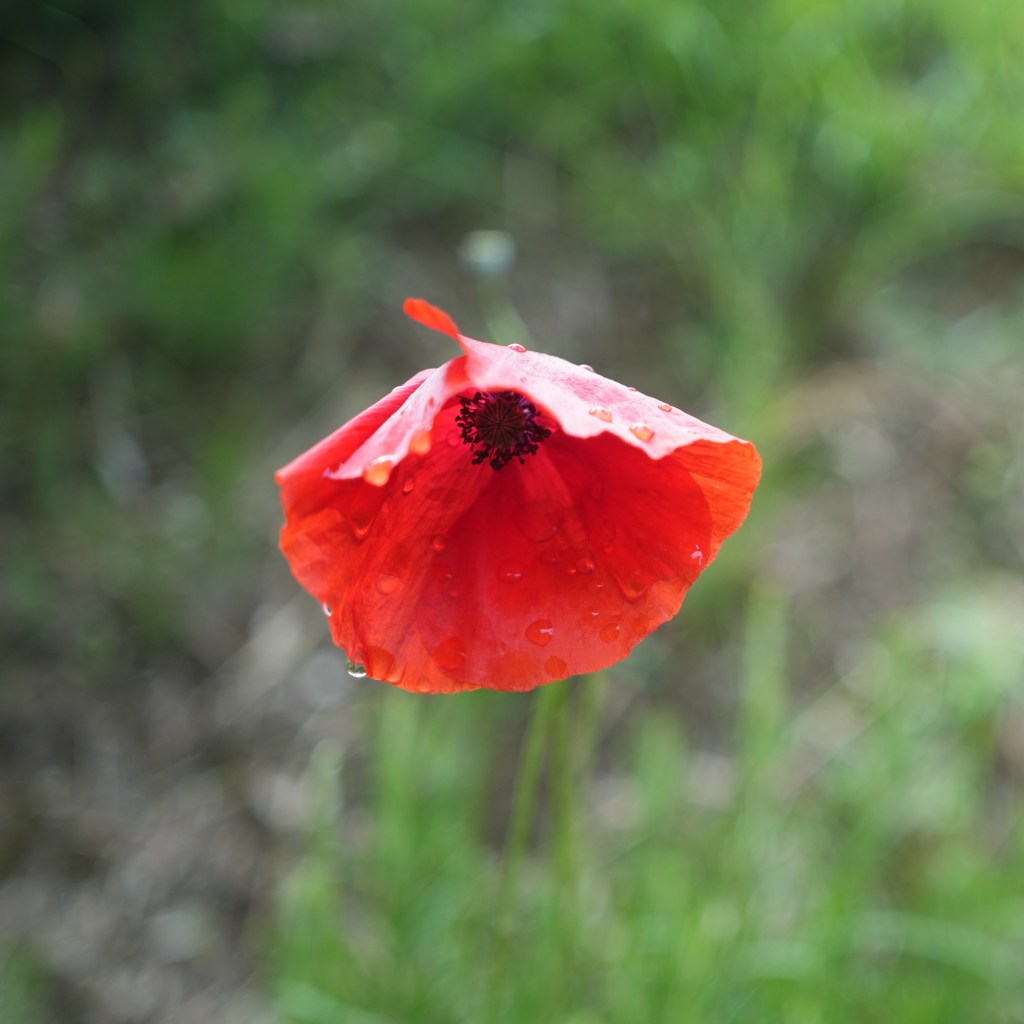
A close-up photograph of a single red poppy with delicate, thin petals that droop mournfully. The flower appears dewy, and the image captures the intimate beauty of a single poppy on a walk in Tuscany, serving as a visual introduction to the 'Close Encounters' series.

Tuscan Irrelevancies X: last suppers

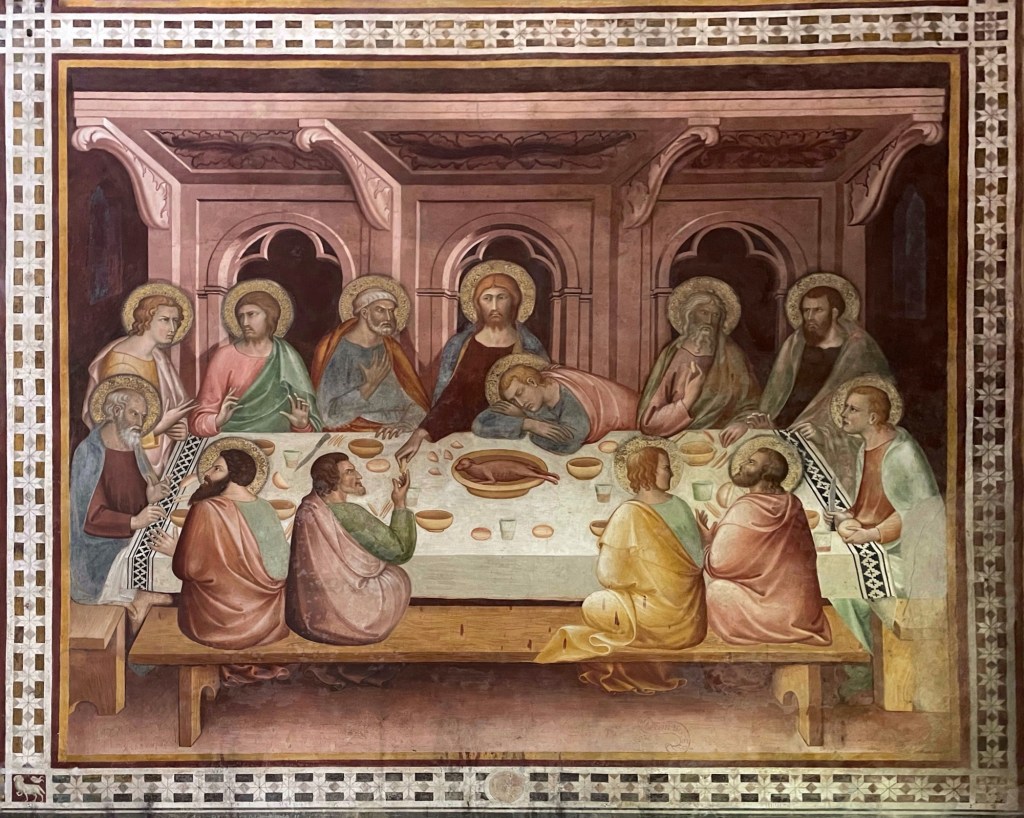
A detail from the famous classical fresco 'The Last Supper' by Duccio di Buoninsegna. The 14th-century painting shows Jesus and his apostles seated at a long, rectangular table in a traditional composition.
Duccio di Buoninsegna, The Last Supper, Opera del Duomo, Siena, fresco
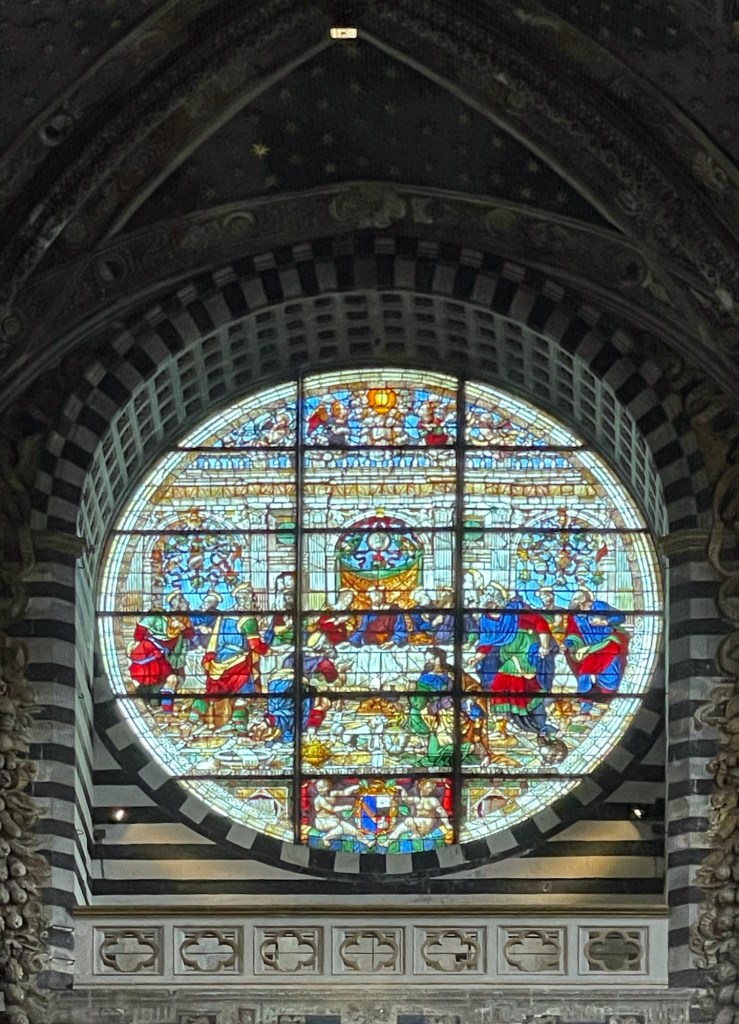
An ornate, circular stained-glass window depicting 'The Last Supper' in a beautiful mosaic of bright colors. The image's location in a cathedral or church and its unique design provide a distinct religious and artistic take on the theme of 'last suppers'.

Pastorino de’ Pastorini, Opera del Duomo, Sienna, stained glass
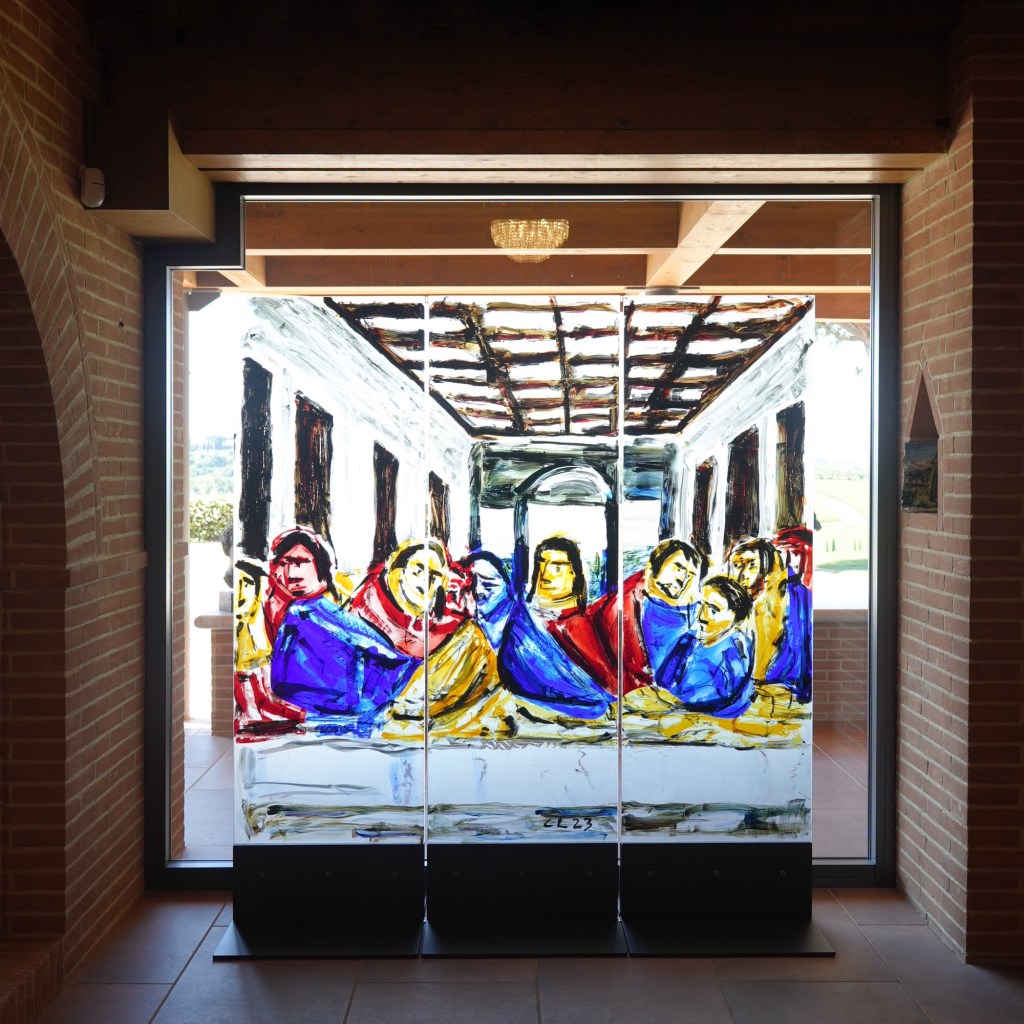
A vibrant and colorful contemporary painting of 'The Last Supper' by Christopher Lehmpfuhl, displayed in a well-lit gallery space. The artwork features abstract, expressive figures in a modern style, contrasting with the classical and traditional depictions of the same scene presented elsewhere in the post.
Christopher Lehmpfuhl, Bindella Vineyard

back in rome
after that tuscan week
we also needed three
on three successive nights
to say goodbye
fully


Tuscan Irrelevancies VIII: high and low

A panoramic photograph of the rooftops and cityscape of Florence, Italy, taken from the top of Brunelleschi's Cupola on the Duomo. The image provides a 'high' perspective of the city under a clear blue sky, contrasting with the more intimate subject of the second image.
view from top of brunelleschi cupola, florence duomo
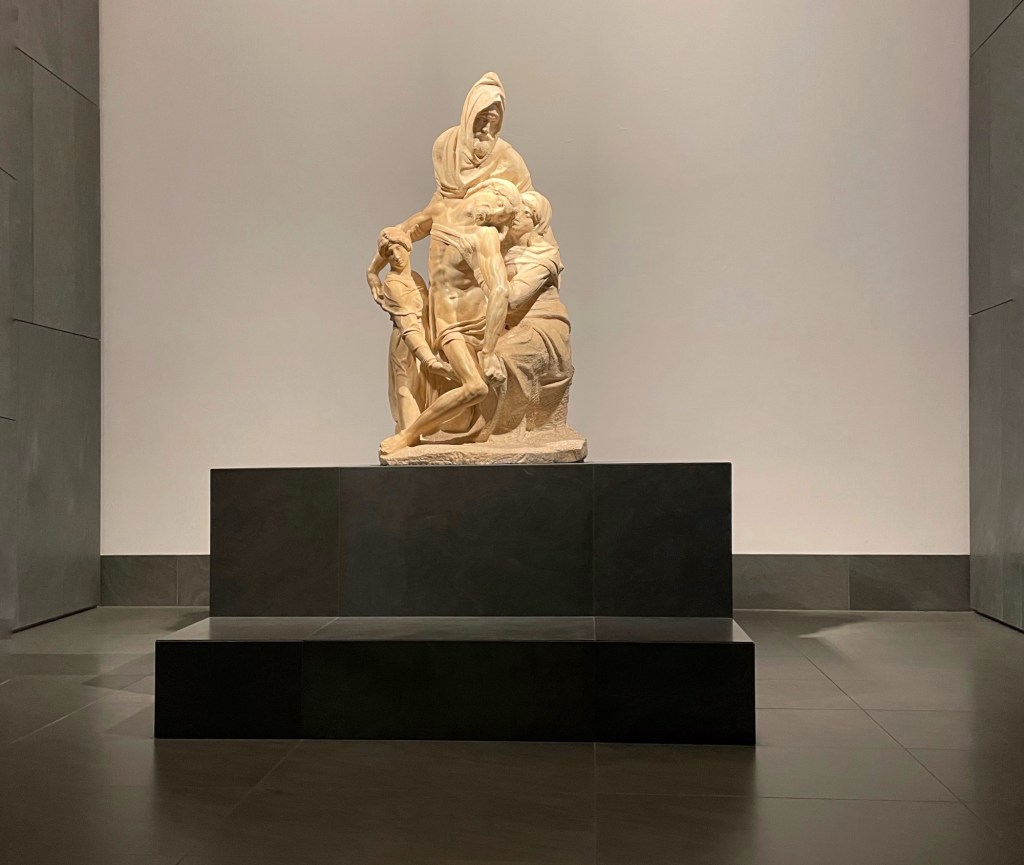
A solemn photograph of Michelangelo's marble sculpture of 'The Deposition,' housed in the Florence Duomo Museum. The sculpture captures a moment of grief and loss, representing the 'low' and emotional counterpoint to the city view in the post
the deposition, michelangelo, florence duomo museum ground floor

Tuscan Irrelevancies VII: eyes right

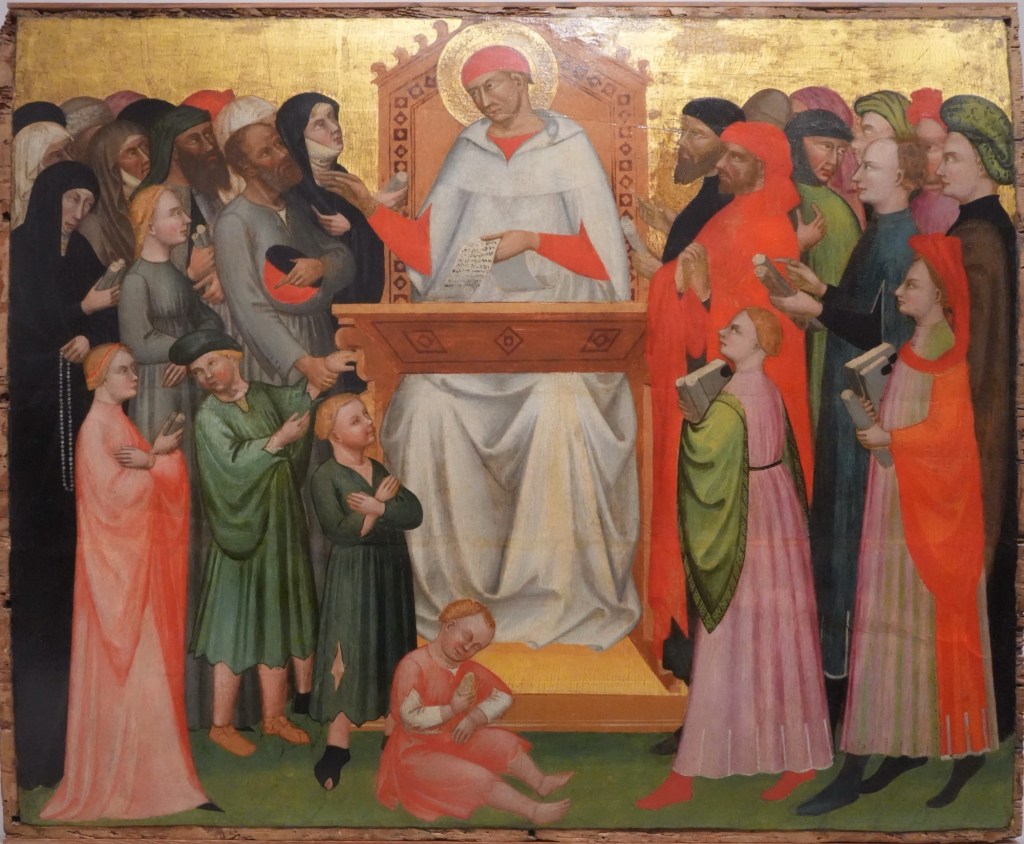
A vibrant, multi-panel early Renaissance painting from the Uffizi Gallery in Florence, Italy, depicting a group of religious figures. The painting's composition is centered on the central figure of St Yves, whose gaze is directed toward the right, where the poor and destitute stand, rather than the left where the rich townsfolk stand.
St Yves administering justice
upstairs of michelangelo‘s david
only an unnamed painter
dismissed as mediocre
(described barely by association
with influencers Agnolo Gaddi and Lorenzo Monaco
themselves hardly tik tok stars in this academy)
empathises with the needy, the orphans and widows
depicts st yves advocate of the poor
ignoring the fawning rich on his left
dispensing small rights to the under side

Tuscan Irrelevancies I: roadside encounter

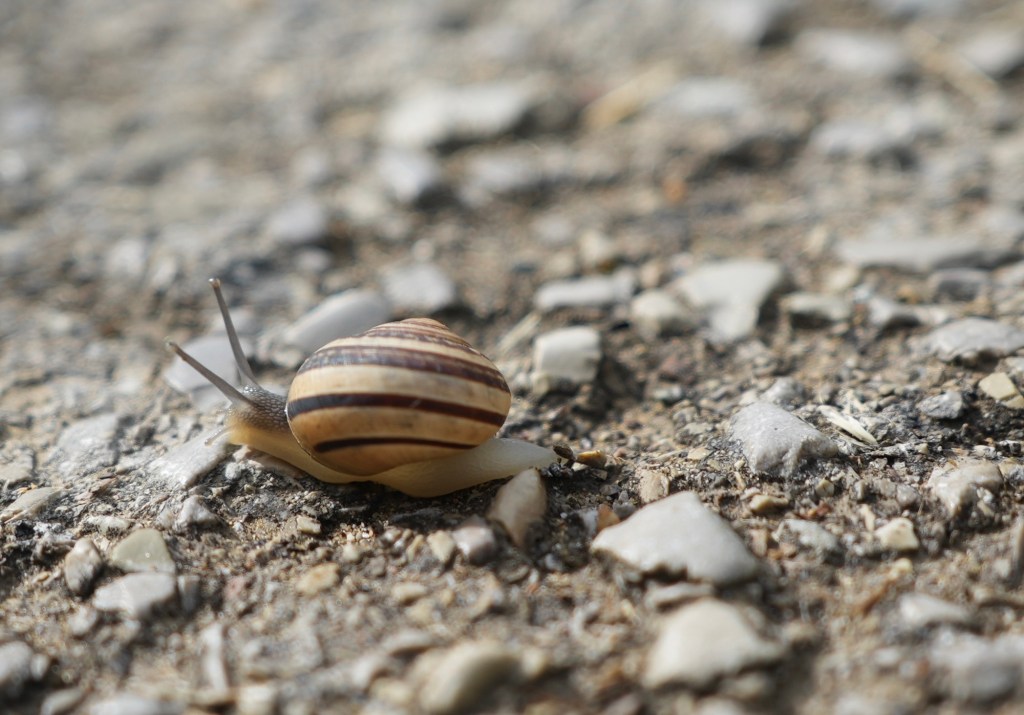
A close-up, low-angle photograph of a small snail with a distinctively striped shell, moving slowly across a gravel road in Tuscany. The image, with its shallow depth of field, draws attention to the subtle beauty of the snail, contrasting with the poem's theme of a trip to iconic Italian landmarks.

It’s a trip marked fully by the fully marked
Portents abounding from Rome to Florence to Cortona
Every step to the Brunelleschi cupola worn by forebears
Every snap in the Ufizi stale before the iPhone is aimed

Sunday afternoon taking out the trash to eco appropriate bins
(Even this task not mundane but meaningfully marked
so glass does not mingle irrelevantly irreverently with gross)
one finally has a roadside encounter shared only with the divine